












Svet
Ocena novice: Vaša ocena:
Ocena 5,0 od 2 glasov Ocenite to novico!
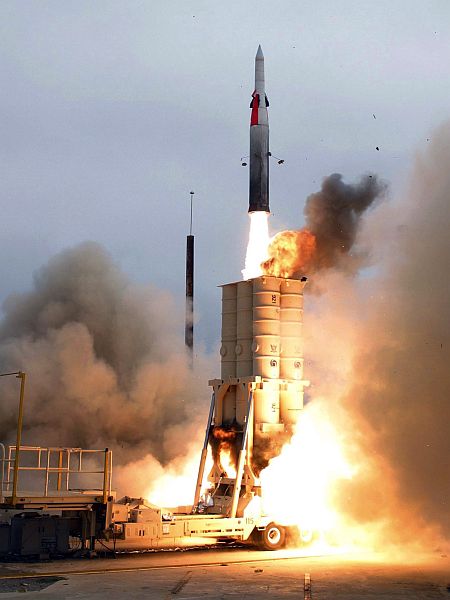
Izstrelitev rakete arrow II
ZDA in Izrael skupaj sodelujeta pri razvoju obrambnega raketnega sistema. Foto: EPA

Dodaj v

Izrael preizkusil raketo

Uspešnih naj bi bilo 90 odstotkov poskusov
7. april 2009 ob 10:52
Jerusalem - MMC RTV SLO/STA/Reuters

Izrael je poskusno izstrelil raketo arrow II, ki naj bi bila del obrambnega sistema pred balističnimi raketami.

Obrambno ministrstvo je sporočilo, da je bil poskus uspešen, saj naj bi raketa prestregla raketo, ki so jo izstrelili iz letala nad Sredozemskim morjem, simulirala pa naj bi iransko raketo šehab. Po poročanju izraelskega radia je bila to že 16. izstrelitev omenjene vrste rakete, 90 odstotkov poskusov pa naj bi bilo uspešnih.

Gre za skupen projekt Izraela in ZDA, ki naj bi se uporabljal kot strateški ščit pred balističnimi raketami iz arzenala Irana in Sirije. V Izraelu, ki preizkuša sistem, da bi izboljšali njegovo delovanje na velikih višinah in proti več tarčami, naj bi bili nameščeni najmanj dve lansirni bateriji.

Izrael se namreč boji, da je cilj iranskega programa bogatenja urana izdelava jedrskega orožja, kar pa Teheran vztrajno zanika.

M. R.

Prijavi napako
Komentarji
karanfil
# 08.04.2009 ob 13:44
Kumrovec propagira izraleski terorizem.
berkut
# 08.04.2009 ob 09:31
nimrod in kubura aka kumrovec, posljita kaksen slovenski link, ne pa trosit idiotizme, ki so napisane v tistem odvratnem angleskem jeziku. Navaron, za samooklicenga strokovnjaka za orozje si nestrokoven, in ponavljas za unitom&co ...cccc, a imas kaksno svoje mnenje ali bos, tako kot kubura, stalno citiral neke posrane zahodne vire? Ne, potem pa ne razmisljaj prevec, ker si v svojem postu dokazal, da nimas s cim
navaron
# 08.04.2009 ob 08:53
Za vse beb*ke, ki to istrelitev primerjajo z S. Korejsko. Korejci, Iranci istreljujejo BALISTIČNE rakete, ki so NAPADALNO orožje namenjen udarom po zemeljskih ciljih tako z klasično, kemično, biološko ali jedersko bojno glavo!! Arrow II je v rangu protiletalskih raket dolgega dosega in je namenjeno OBRAMBNIM akcijam, natančneje za klatenje balističnih raket dolgega dosega. Rakete podobnega ranga (protiletalske rakete dolgega dosega) kot je arrow II Korejci ter Iranci istrelijo vsak teden. Očitno islamokomunajzarska naveza hoče z zavajanjem istrelitev il prestrezne rakete primerjat z Korejsko ali Iransko!!!
Dr. Kumrovec
# 07.04.2009 ob 19:13
Napačno je misliti, da ilegalni jedrski program teheranskega rezima predstavlja nevarnost zgolj za Izrael. Iran oborozen z atomsko bombo predstavlja groznjo tudi vsem zmernim arabskim drzavam v regiji na poti liberalizacije in demokratizacije.
lojzi1
# 07.04.2009 ob 17:47
navečji fašistično teroristični okupatorsko morilski državi na svetu preizkušata nove rakete a drugim državam bi sledile sankcije Severni korejci so že pokazali da lahko dosežejo sataniste Iran pa nebo dolgo ko bo preizkusil jedrsko bombo in tako je tudi prav kajti ti dve džavi sta prisiljeni uničit kvazi državo izrael ter njene morilce ki že koljejo nedožno Palestinsko prebivalstvo vrsto let ter to ami drhal ki se nenehno vojskuje ter pobija civilni narod zato pa tako Iran kot Korejci morata uničiti ti dve državi ki je leglo vsega najslabšega na zemljiin bo svet veliko lepši brez teh poganskih držav
hebl
# 07.04.2009 ob 15:42
20. turquoise - se opravičujem :) pač na čase je v pisani besedi težko prepoznati cinizem, sarkazem ipd.
maestro20
# 07.04.2009 ob 15:34
Kje je pa zdj Obama pa ostala "bagra"....? A to je pa seveda v obrambne namene, S.Koreja je pa skrajno napadalna...? Dejto to kakšnim drugim kekcom prodajat.
PLO
# 07.04.2009 ob 14:36
Nimrod No.1 (07.04.2009 || 12:08:09)

'600 Iranian missiles pointed at Israel', The Jerusalem post

torej židovski protiraketni ščit nima za burek, če iranci preobreminijo zadevo:)
dane32
# 07.04.2009 ob 14:20
verjetno sankcij proti židom ne bo...
turquoise
# 07.04.2009 ob 14:15
17.hebl; he, matematika na splošno mi gre kr dobro oz. zelo dobro, samo moj prejšn komentar je bil cinične narave...
Nimrod No.1
# 07.04.2009 ob 14:12
Iranian Weapons of Mass Destruction
Doctrine, Policy and Command

Anthony H. Cordesman and Adam Seitz, January 13, 2009
Center for Strategic and International Studies, 1800 K Street, NW, Washington DC,

Iran’s nuclear ambitions and missile programs, and their interactions with Iran’s growing capabilities for asymmetric warfare, are becoming steadily more critical security issues for the US, Iran’s neighbors, and the international community. Their foreign and domestic policy implications will be a major issue that the next Administration must address during its first months in office.

Iran may still be several years to half a decade away from becoming a meaningful nuclear power, but even a potential Iranian nuclear weapon has already led Iran’s neighbors, the US, and Israel to focus on the nuclear threat it can pose and its long-range missile programs.
The CSIS has addressed these policy issues in a number of studies and publications. These include Anthony H. Cordesman and Khalid R. Rodhan’s, Iran’s Weapons of Mass Destruction: the Real and Potential Threat, CSIS, 2006; and Anthony H. Cordesman and Martin Kleiber’s, Iran’s Military Forces and Warfighting Capabilities, CSIS, 2007; and Anthony H. Cordesman’s recently released assessment, The US, Israel, the Arab States and a Nuclear Iran, which is available on the CSIS web site at:
http://www.csis.org/media/csis/pubs/0810
06_iran_nuclear.pdf

The Burke Chair has prepared a new set of briefs, prepared by Anthony H. Cordesman and Adam C. Seitz, which summarize Iran’s actions, current and potential capabilities, and the possible outcome of a nuclear exchange. This briefing draws on official statements, US intelligence judgments, work by the IAEA, and material provided by a number of other research centers, including the Nuclear Threat Initiative, ISIS, the Federation of American Scientists, Global Security, and the Brooking Institution among others.

The Burke Chair is releasing these documents in a series of working drafts in an effort to obtain outside views, comments, criticisms, and additions. We hope to use such comments to provide a more comprehensive and more accurate picture of Iran’s controversial and destabilizing WMD programs despite the uncertainty surrounding these foreign policy nightmares.

A new report, entitled “Iranian Weapons of Mass Destruction: Doctrine, Policy and Command” is now available on the CSIS web site at:
http://www.csis.org/media/csis/pubs/0901
12_iran_wmd_policy.pdf

This draft gives some insight into Iran’s ambiguous doctrine, policy and command structure. Identifying the key decision-makers is essential in assessing risks, in trying to establish lines of accountability, and in seeking to ensure that any diplomatic outreach is targeted at those who have the power to affect a regimes behavior. But in the case of Iran it is difficult to be certain of the way in which leaders approach the development of missiles and weapons of mass destruction, due to the significant uncertainties that Iran’s national command structure presents that is made all the more difficult by contradicting and misleading rhetoric by ranking officials

The difficulty in assessing Iran’s true intentions, the future of Iranian foreign policy and nuclear doctrine have been made all the more difficult – and troubling – by recent shifts and growing influence of hard-line IRGC members in the Iranian decision-making and command structures. This section examines these changes and looks at the implications they may have on various aspects of Iranian foreign policy, decision-making, nuclear doctrine, C4I, weapons and nuclear proliferation, and the prospects for meaningful negotiations as Iran’s nuclear program continues to proceed amid international pressure.

The previous drafts in this series are also available via the CSIS Burke Chair web page at www.csis.org/burke, and are as follows:
• “Iranian Weapons of Mass Destruction: Capabilities, Developments, and Strategic Uncertainties” is available on the CSIS web site at http://www.csis.org/media/csis/pubs/0810
15_iran.wmd.pdf . It covers the capabilities and uncertainties of Iran’s missile program, as well as other possible means of deliver that Iran could utilize in conjunction with its CBRN programs.

• “Iranian Weapons of Mass Destruction: Capabilities, Developments, and Strategic Uncertainties
(Chemical Weapons Programs)” is available on the CSIS web site at http://www.csis.org/media/csis/pubs/0810
22_irancw_chapters.pdf . It covers the capabilities and uncertainties of Iran’s chemical weapons program, as well as the ambiguities of Iran’s CW strategy and intentions, with regards to its participation in the Chemical Weapons Convention (CWC), while possibly maintaining a CW program.

• “Iranian Weapons of Mass Destruction: Biological Weapons Programs
” is available on the CSIS web site at http://www.csis.org/media/csis/pubs/0810
28_iranbw_chapterrev.pdf. It covers the capabilities and uncertainties of Iran’s biological weapons program, as well as the problems posed by the ease of access to dual-use technology, and Iran’s ambiguous BW strategy and intentions. It also lays out biological attack scenarios, as well as the obstacles to weaponization of biological agents and possible delivery options for Iran.

• “Iranian Weapons of Mass Destruction: Iran’s Nuclear Program: Work in Progress?
” is available on the CSIS web site at http://www.csis.org/media/csis/pubs/0811
06_iranwmdnuclear.pdf . This draft covers multiple aspects of Iran’s nuclear programs, including an assessment of Iran’s current nuclear status and possible future nuclear capabilities. In this draft is a history of Iran’s nuclear ambitions, the progress in the different sectors of Iran’s nuclear programs, the declared and possible functions of Iran’s nuclear facilities, and issues posed by Iranian ambiguity regarding its nuclear program, among other aspects of Iran’s nuclear program. Although it is difficult to draw a clear picture of Iran’s nuclear ambitions, capabilities, and intentions – which is also a factor discussed in this section – this draft draws as clear a picture as possible with the open source information that is currently available.

• “Iranian Weapons of Mass Destruction: The Broader Strategic Context
” is available on the CSIS web site at http://www.csis.org/media/csis/pubs/0812
08_irannucstratcon.pdf. This draft covers the broader strategic context of Iran’s WMD real and potential capability. It covers how all of the aspects of Iran’s WMD programs fit into the broader strategic context with Iran’s conventional military forces, the IRGC, use and support of proxies, and ambiguous statements and actions.


Zaustavite Iran preden bo prepozno!!!
smejka
# 07.04.2009 ob 13:47
Opala, a tole pa ni provokacija za zahodnjake??
bruh
hebl
# 07.04.2009 ob 13:37
no, prvo kot prvo: S. Koreja je že sama po sebi zganjala vik in krik okoli izstrelitve (so prav provocirali) - seveda pa so zahodni mediji še dodatno ojačali ta krik
Izrael je pa izstrelitev opravil brez groženj ali zbujanja pozornosti - to v kombinaciji zahodnih medijev (ki niso zadeve dodatno izpostavljali) je prineslo k temu, da smo zvedli šele po vsem skupaj
Če gre ravno za dvoličnost je težko reči, ker se gre za povsem različni izstrelitvi - eno je obrambna raketa, drugo pa balistična nosilna raketa (pa če je šlo za satelit ali ne - enkrat so S. Korejci že rekli, da bodo izstrelili satelit, pa se je na koncu izkazalo, da gre za preizkus balistične rakete - kroničnemu lažnivcu je malo težko verjet)
Poleg tega je S. Koreja kršila tuj zračni prostor (japonski) - Izrael je kompletno izvedel nad lastnim ozemljem

5. turquoise (07.04.2009 || 12:01:59) - narobe razumeš ... pri verjetnosti 90% ni gotovosti, da bo ena od 10 zadela ... je samo velika verjetnost, da bo; lahko se zgodi, da že prva zadene, lahko pa tudi še 20. raketa ne uspe - samo verjetnosti obeh dogodkov sta mali, ampak sta možni
Dr. Kumrovec
# 07.04.2009 ob 13:14
@luksimir

ti imaš mentaliteto 10. septembra 2001.
luksimir
# 07.04.2009 ob 12:52
"A U.S. Central Intelligence Agency report dated January 2001 speculated that Iran had manufactured and stockpiled chemical weapons - including blister, blood, choking, and probably nerve agents, and the bombs and artillery shells to deliver them. It further claimed that during the first half of 2001, Iran continued to seek production technology, training, expertise, equipment, and chemicals from entities in Russia and China that could be used to help Iran reach its goal of having indigenous nerve agent production capability."

In ti temu verjameš???? Verjetno si tudi ploskal, ko je Powell v VS-ju predstavljal dokaze da ima Irak WMD... Kar je bilo seveda prav tako res... Ker CIA nima namena zavajati in se nikoli ne zmoti...
luksimir
# 07.04.2009 ob 12:51
"G*d bless holy nation of Israel - Defender of Freedom and Liberty against the forces of Evil and Terror!"

Kolk si mi zanimiv s temi tvojimi provokacijami... Ker nobenden normalen ne bi moral kaj takega napisati in misliti resno...

Ker če že merimo stvari v stopnjah fundamentalizma, so Izraelci ravno tam nekje kot ekstremni arabci...
Dr. Kumrovec
# 07.04.2009 ob 12:46
The report further said that "available information about Iranian activities indicates a maturing offensive program with a rapidly evolving capability that may soon include the ability to deliver these weapons by a variety of means"
Dr. Kumrovec
# 07.04.2009 ob 12:42
A U.S. Central Intelligence Agency report dated January 2001 speculated that Iran had manufactured and stockpiled chemical weapons - including blister, blood, choking, and probably nerve agents, and the bombs and artillery shells to deliver them. It further claimed that during the first half of 2001, Iran continued to seek production technology, training, expertise, equipment, and chemicals from entities in Russia and China that could be used to help Iran reach its goal of having indigenous nerve agent production capability.
KavonB
# 07.04.2009 ob 12:42
S.Koreja, Iran, Pakistan, ne vi pa ne; vi barabini vi.
Izrael, ZDA, Kitajska, Rusija, vi pa lahko, saj so vaše rakete ja za mir.
Nimrod No.1
# 07.04.2009 ob 12:14
Expert says Iran can make nuclear weapons | World News | Reuters.co.uk
Nimrod No.1
# 07.04.2009 ob 12:13
Israel Middle East expert says regime change essential for Iran
Nimrod No.1
# 07.04.2009 ob 12:11
Weapons of Mass Destruction-Iran Missile Program, Iran had developed a chemical warfare capability, GlobalSecurity.org
freakazoid
# 07.04.2009 ob 12:08
jaojao se podpišem!
Nimrod No.1
# 07.04.2009 ob 12:08
'600 Iranian missiles pointed at Israel', The Jerusalem post
turquoise
# 07.04.2009 ob 12:01
se prav 10 šehabov morjo iranci vržt za zagotovljen zadetek, če prav razumem?
Lluka
# 07.04.2009 ob 11:58
Dvoličnost .
Nimrod No.1
# 07.04.2009 ob 11:56
Zaustavite Iran preden bo prepozno!!!
jaojao
# 07.04.2009 ob 11:27
Svetovna javnost pa le nemo opazuje kako preizkusajo rakete, medtem pa vik in krik ko hoce S Koreja preizkusiti svojo pa mislim da vsi vejo kdo je vecji agresor in koliko tisoce ljudi je padlo pod judovskimi vojaskimI akcijamI. SVET JE LEP IN POSTEN za bruhat...
Dr. Kumrovec
# 07.04.2009 ob 11:19
G*d bless holy nation of Israel - Defender of Freedom and Liberty against the forces of Evil and Terror!
Kazalo